GAF Nomad VH-MSF Просмотр ZIP-архива
Nomad_N22C/Nomad_N22C_notes.txt
GAF Nomad N22C - VH-MSF

NOTES ABOUT THE NOMAD

Engines
The engine gauge stack may be a bit hard to read. From the top going down the instruments are:
1/ Torque Pressure (red lines at 102 psig). A torquemeter in the engine provides a pressure signal which is directly proportional to engine output tourque. The indicator dial is graduated from 0 to 120 in increments of 2.5 psi.
2/ N2% RPM (red lines at 105%). Measures and indicates the engine power turbine RPM as a percentage of maximum rated speed (100% = 33,290RPM). The outer scale of the gauge is marked from 0 to 100 in increments of 2. There is a small vernier inner scale, graduated from 0 to 10 in increments of 1.
3/ TOT (Turbine Outlet Temperature). This is a thermocouple system which measures and indicates the temperature at the gas producer turbine outlet. The indicator gauge is graduated from 0 to 1000 in increments of 20 degrees Celcius. Red lines at 810 degrees.
4/ N1% RPM (Gas Producer Turbine). Indicates the Gas Producer Turbine RPM as a percentage of the maximum rated speed (100% = 50,970 RPM). The instrument is labeled N1, but is otherwise the same as the N2% gauge.
5/ Fuel Flow. Instrument reads in tens of lb/hr. Multiply by 10 to get actual lb/hr flow rate.
6/ Oil temp/oil pressure .In the real aircraft these are two separate gauges. I have combined them here to save panel space.
7/ Fuel quantity gauges. Four of these, showing auxillary levels outboard, main tanks inboard. Instrument reads in hundreds of pounds.

Limits
Take off (5min); Torque 102psi, TOT 810, N1%RPM 105, N2% RPM 105, Oil temp 107
Max continuous power; Torque 94psi, TOT 810, N1% 105, N2% 100, oil temp 82
Start; TOT 927 (up to 10 sec)

Weights
I have made the weight and balance specifications based on the real weight and balance chart from the RFDS on this aircraft. It was based on the following load.
Pilot weight 85kg
Medical bag next to cabinet 11kg
Medical cabinet 34kg
Flight nurse in seat 3, 65kg
stretcher 11kg, plus patient 85kg
Maximum Fuel load 802L @0.8kg/l density = 641kg.
Total weight = 3775kg, 7644lb

Airspeed indicator
Red Radial VMO; 166 Kias
White arc flaps operating range; 20 degree flap; 57 - 120 KIAS, flaps down; 51 - 100
Red radial VMC; 66 KIAS
Blue radial VYSE; 87 KIAS


NOTES ABOUT THE ROYAL FLYING DOCTOR SERVICE

This organisation was started in 1928 by the Reverend John Flynn, and is celebrating its 75th year (2003). It provides for emergency medical and primary health care needs of people living in remote areas of Australia. It now operates out of 21 bases across the country. It is a non government, not for profit charity. All of the costs associated with purchasing an aircraft are met by public fundraising. Please consider a donation. The website gives more information about the service in general and can be reached on www.flyingdoctors.org or www.rfds.org.au or our postal address is RFDS, GPO Box 3537, Sydney NSW 2001, Australia.


NOTES ABOUT VH-MSF

Serial number N22B-69. This aircraft entered service as a Nomad N22B but was modified to the C model in 1990. Where I have called it C model in one file and B in another in practice makes little difference. The difference between the two models was some structual modifications that allowed the max Ramp weight to be increased to 9000lb from 8500. It commenced operation from Broken Hill in 1980 . It became somewhat famous as the aircraft depicted in the TV series "The Flying Doctors" in the 1980s. It was sold in 1995 and it is still on the Australian registry in Queensland, though not flying in a medical capacity.


NOTES ABOUT AEROMEDICAL PROCEEDURES

This aircraft was unpressurised. This means the biggest operational limitation to its use in a medical capacity had to do with the management of certain conditions where change in atmospheric pressure would affect the patient. In these circumstances, the absolute altitude of the aircraft's flight would be limited. Luckily, Broken Hill is only at 1000ft elevation, and the surrounding countryside is even lower, with no real terrain obstacles. Some of these conditions include (but are not limited to)
Ear /nose /sinus problems, Bowel obstruction, pneumothorax (collapsed lung), skull fractures, penetrating eye injuries, penetrating injury of any type, compound fractures, & patients immediately post operative. If the patient had a condition of this natue, the aircraft would be flown at minimun safe altitude. Obviously bad weather / visibility would influence this. If a higher altitude was required due to weather or visability, then the attending doctor would have to weigh up the risks involved and either delay the trip or find alternate means of transporting the patient.
nomad_n22c.zip
| Имя файла | Дата | Размер |
|---|---|---|
| Nomad_N22C/aircraft.cfg | 10.03.2003 09:40 | 7 KB |
| Nomad_N22C/gauges/ | 01.03.2003 13:43 | |
| Nomad_N22C/gauges/Gauge000.gau | 22.02.2003 20:27 | 52 KB |
| Nomad_N22C/gauges/nomad-altimeter.gau | 02.02.2003 17:58 | 202 KB |
| Nomad_N22C/gauges/nomad-clock.gau | 02.05.1998 15:28 | 132 KB |
| Nomad_N22C/gauges/nomad-lauxfuel.gau | 20.12.1999 10:33 | 118 KB |
| Nomad_N22C/gauges/nomad-lmainfuel.gau | 20.12.1999 10:34 | 118 KB |
| Nomad_N22C/gauges/Nomad-N22_fuel_L.gau | 22.02.2003 12:00 | 19 KB |
| Nomad_N22C/gauges/Nomad-N22_fuel_R.gau | 22.02.2003 14:03 | 19 KB |
| Nomad_N22C/gauges/nomad-rauxfuel.gau | 20.12.1999 10:36 | 118 KB |
| Nomad_N22C/gauges/nomad-rmainfuel.gau | 20.12.1999 10:37 | 118 KB |
| Nomad_N22C/gauges/nomad-turn_coordinator.gau | 08.02.2003 11:45 | 107 KB |
| Nomad_N22C/gauges/NOMAD22.engine.gau | 02.10.2001 02:37 | 382 KB |
| Nomad_N22C/gauges/NOMAD22.engine2.gau | 22.02.2003 15:47 | 386 KB |
| Nomad_N22C/gauges/nomad_n22.airspeed.gau | 08.02.2003 11:10 | 100 KB |
| Nomad_N22C/gauges/NOMAD_N22.vertical_speed.gau | 08.02.2003 11:37 | 103 KB |
| Nomad_N22C/gauges/Nomad_N22c.directional-gyro.gau | 08.02.2003 11:50 | 242 KB |
| Nomad_N22C/gauges/Nomad_N22C.flaps.gau | 26.02.2003 00:04 | 15 KB |
| Nomad_N22C/gauges/nomad_N22C.gau | 01.03.2003 11:41 | 2 MB |
| Nomad_N22C/model/ | 01.03.2003 13:28 | |
| Nomad_N22C/model/model.cfg | 27.09.2002 04:33 | 24 B |
| Nomad_N22C/model/nomad.mdl | 02.02.2003 15:14 | 1 MB |
| Nomad_N22C/nomad & ambulance.gif | 01.03.2003 14:07 | 13 KB |
| Nomad_N22C/nomad & ambulance.jpg | 01.03.2003 14:05 | 42 KB |
| Nomad_N22C/nomad & ambulance255.jpg | 01.03.2003 14:06 | 13 KB |
| Nomad_N22C/nomad panel.jpg | 01.03.2003 14:02 | 67 KB |
| Nomad_N22C/NOMAD_N22C.air | 01.03.2003 11:33 | 16 KB |
| Nomad_N22C/Nomad_N22C_check.txt | 01.03.2003 16:27 | 6 KB |
| Nomad_N22C/Nomad_N22C_notes.txt | 02.03.2003 19:53 | 5 KB |
| Nomad_N22C/Nomad_N22C_ref.txt | 01.03.2003 16:35 | 2 KB |
| Nomad_N22C/panel/ | 01.03.2003 13:27 | |
| Nomad_N22C/panel/MAIN_PANEL.bmp | 25.02.2003 23:31 | 769 KB |
| Nomad_N22C/panel/Panel.cfg | 01.03.2003 13:14 | 5 KB |
| Nomad_N22C/panel/roofpanel.bmp | 25.02.2003 23:02 | 589 KB |
| Nomad_N22C/panel/THROTTLE_QUADRANT_BACK.bmp | 22.02.2003 18:31 | 234 KB |
| Nomad_N22C/panel/Thumbs.db | 01.03.2003 13:26 | 81 KB |
| Nomad_N22C/Read_me_first.txt | 10.03.2003 09:09 | 7 KB |
| Nomad_N22C/sound/ | 01.03.2003 13:23 | |
| Nomad_N22C/sound/sound.cfg | 27.09.2002 04:14 | 61 B |
| Nomad_N22C/texture/ | 01.03.2003 13:27 | |
| Nomad_N22C/texture/ambulance.bmp | 01.03.2003 21:23 | 341 KB |
| Nomad_N22C/texture/nomad_in_l.bmp | 27.02.2003 00:48 | 1 MB |
| Nomad_N22C/texture/nomad_in_t.bmp | 01.03.2003 21:22 | 1 MB |
| Nomad_N22C/texture/nomad_l.bmp | 01.03.2003 13:09 | 1 MB |
| Nomad_N22C/texture/nomad_t.bmp | 01.03.2003 21:21 | 1 MB |
| Nomad_N22C/texture/Thumbs.db | 02.03.2003 20:53 | 113 KB |
| Nomad_N22C/Thumbs.db | 01.03.2003 14:07 | 33 KB |
| Nomad_N22C/ | 10.03.2003 09:09 | |
| avsim_ru.diz | 14.03.2004 00:20 | 409 B |
| Итого: | 13 MB | |
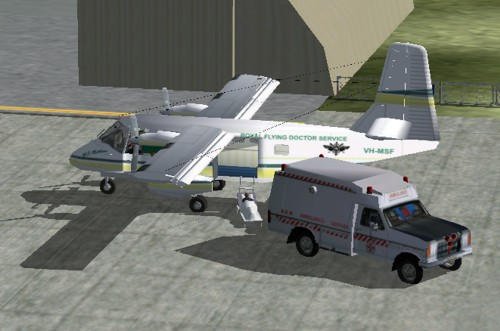
Aircraft VH-MSF Gmax. Complete medical version, interior, everything is animated.
→ Size:
3 MB
→ Date:
23 years ago (10.03.2003 12:03)
→ Author:
Mike Hill
→ License:
Freeware - Free version, Unlimited Distribution
→ Downloaded:
713 time(s)