Midnight Hawks v2 Просмотр ZIP-архива
Aircraft/Midnight2/BAe Hawk.txt
BAe Hawk MK.51A


Aircraft Type:		Trainer/Light Fighter
First Flight: 		21/8/74
Entered Service:		10/76?
Users:			Abu Dhabi, Algeria, Dubai, Finland, Indonesia, Kenya, Kuwait, Saudi Arabia, Switzerland, UK (RAF), 				USA (Navy), Zimbabwe.

Specification
Wings:			Low-mounted, swept-back, and tapered with curved tips.
Engine:			One turbofan located inside the body. Semicircular air intakes alongside the body forward of the 				wing roots. Single exhaust.
Fuselage:			Club-shaped with pointed nose and a taper to the rear. Bubble canopy.
Tail:			Flats are high-mounted on the fuselage, swept-back, and tapered. Swept-back and tapered fin with a 			curved tip.
Powerplant:		1 Rolls-Royce 5340lb Rolls-Royce/Turbomeca Ardour 151 turbofan

Performance
Speed (Kmph):		1014 at low level, Mach 1.1 in shallow dive
Range (Km): 		1207 internal fuel only
Service Ceiling (m):		15240

Dimensions
Wingspan (m):		9.39
Wing Area(m2):		16.69
Length (m): 		11.95
Height(m): 		4.08

Weights
Empty Weight (kg):	3379
Max Take Off Weight (Kg)	7375

Weaponry
Guns: 			None fitted as standard but one 30mm cannon can be carried as standard on centreline station
			30 mm ADEN cannon


Bombs etc:		RAF Hawks are normally equipped to carry the centreline cannon pod, and upto 1,500lb of stores.
			Export versions can carry 6800lb (centreline can hold 1000lb with four wing hardpoints).
			R-60 APHID infraredmissile
			AIM-9P2 infraredmissile

Crew: 2


History:

The BAe Hawk (nee Hawker Siddeley Hawk) first flew on 21st August 1974 and to celebrate its 25th anniversary the Valley Aviation Society organised a small photocall and static display of representative aircraft to raise money for the NSPCC. Four Hawks carried special 'BAe Hawk 25 Years' markings on their tails, three from Valley XX158, XX174, XX236 and XX154 from DTEO Llanbedr. Also present was FAB 350 Sqn F-16A, FA131/FS to commemorate the founding of this squadron at Valley in 1941 and Delta Engineering's Hunter T7B WV318 to represent this type previously operated at Valley. British Aerospace sent Hawk 100 ZJ100 and the USAF's long association with this airfield was represented by 95790 MH-53J from 21st SOS, Mildenhall. One further Hawk, XX258, carried 'NSPCC' markings on the tail to mark the charity supported by the personnel at Valley during 1999.

Born from Air Staff Target (AST) 397 of January 1970, which required a basic/advanced trainer to replace the Folland Gnat, the aircraft was designed and built by Hawker Siddeley and originally given the designation HS.1182, being successful in winning the tender against an alternative design promoted by the British Aircraft Company (BAC), the P59. Ironically the Hawk would prove to be one of the very last designs by the company as it was merged with its competitor to form the fledgling British Aerospace, and as such was one of the last inter-British aviation competitions. Given the name Hawk in 1973, the airframe had an initial life of some 6,000 hours, enough for about twenty years...such has been the success and ruggedness of the airframe that it has surpassed this by some margin, and a successor has yet to be announced, although a majority of the fleet gained new wings some years ago as stress fractures were encountered on some examples.

An order for 176 Hawks was placed in March 1972, some two years before the type would make its first flight, such was the confidence in the design. A single pre-production aircraft was part of the order, this being XX154, which would eventually be returned to service, flying with the A&AEE and subsequently DRA and derivatives. Originally scheduled for its first flight on 22 August 1974, impending poor weather prompted the team to go for the first flight the day before, test pilot Duncan Simpson getting airborne in the early evening at 19:20. A flight of fifty-three minutes followed, during which '154 achieved 325 knots and reached an altitude of 20,000 feet without incident.

The following five aircraft from XX154 were used for development work and the last delivery to the RAF was XX158 on 17 March 1982, about a month after the last production aircraft (XX353) had been handed over on 9 February. RAF Valley was the first station to receive the new trainer, XX161 arriving on 1 April 1976 to begin the long transition from the Gnat. Eighteen more Hawks were due to be ordered in 1980, but these fell victim to the Defence cuts of the year and so the original 176 has reduced to 143 serviceable aircraft over twenty-three years of active service, a loss of just under two a year. This has led to a shortage of late, with examples previously used for testing duties returned to the training role, themselves replaced by Hunters returned to active duty.

Employed mainly for fast jet training, in times of war the Hawk would bolster the front-line air defences as a fighter, some of the fleet having the capability to carry Sidewinders in addition to the Aden cannon carried on the fuselage centreline (denoted by the T1A designation), including those of the Red Arrows. Lacking a radar, the Hawk would be unable to operate independently, but would operate in a mixed force with Tornado F3s under the control of AWACS. The quick turning Hawk would actually be a better proposition in a close-in dogfight, leaving the Tornados to undertake the Beyond-Visual-Range targets.

Also famous for equipping the world-famous Red Arrows, the team has been heavily involved in promoting the Hawk overseas, contributing to the enormous sales success the type has achieved. Part of this success can be credited to the Hawker Siddeley design team, who were determined to cater for more than the basic RAF requirement. Most of this enhancement can be seen in the cockpit, which features the raised rear seat for excellent visibility, air-conditioning and a duplicate set of controls for the 'back-seater'. A generous fuel allowance allows the Hawk to fly two training sorties without refuelling, with enough in reserve for diversions if necessary. This feature has proved to be very useful for the Reds, who can spend less time en-route than was possible with the Gnat. The wing is a one-piece section fitted to the fuselage with just six bolts, and incorporates two hardpoints on each side, allowing a load of up to 6,800lbs (3,100kg) to be carried. This has led to the type being developed as a ground-attack aircraft for smaller nations, typified by the single-seat type 200 which has no intended training role.

Overseas orders have included Mk51s for Finland, Mk52s for Kenya, Mk53s for Indonesia, Mk60s for Zimbabwe, Mk61s for Dubai, Mk63s for Abu Dhabi, Mk64s for Kuwait, Mk65s for Saudi Arabia, Mk66s for Switzerland and Mk67s for South Korea. The 60 series Hawk has a more powerful Adour engine and a number of improved features over the series 50, but there are few differences between the types delivered to each air force. Introduced in the mid-eighties were the Series 100 and 200 types, the 100 being a two-seat derivative of the 200. Confused? Good. Deliveries have included Mk203s and 103s to Oman, Mk205s to Saudi Arabia, Mk208s and 108s to Malaysia and Mk102s to Abu Dhabi. Perhaps its greatest accolade is being chosen by the US Navy as its primary jet trainer, all American Hawks being known as the McDonnell Douglas (now Boeing) T45 Goshawk, a much modified airframe capable of being operated from carriers.

For the immediate future, Hawk's light is still shining brightly. Earlier this year the MoD awarded a contract worth Ј100 million to BAe for eighty new fuselages under programme mod 2010. Commencing shortly, the contract will involve the existing fuselage being stripped and transported to the factory at Brough where the rear two-thirds will be replaced with a new section similar to the Mk65, after which the airframe will return to St. Athan for installation of new avionics and systems. This will enable a suitable lead-in trainer for Eurofighter to be established with 'glass' cockpits and up-to-date control systems, giving the Hawk another decade or so of useful life before a replacement is found. They won't have to look far however, as the only logical replacement will be a new-build Hawk!
midhwani.zip
| Имя файла | Дата | Размер |
|---|---|---|
| Modules/FSSound.dll | 12.11.2001 03:53 | 13 KB |
| Sound/smoke off go.wav | 05.08.2002 15:33 | 15 KB |
| Sound/smoke on go.wav | 05.08.2002 15:31 | 14 KB |
| Aircraft/Midnight2/ | 31.01.2003 16:03 | |
| Aircraft/Midnight2/Aircraft.cfg | 31.01.2003 13:44 | 9 KB |
| Aircraft/Midnight2/README_panel.txt | 31.01.2003 13:04 | 5 KB |
| Aircraft/Midnight2/BAe Hawk.txt | 30.04.2001 05:55 | 8 KB |
| Aircraft/Midnight2/Midnight Hawks.air | 31.01.2003 13:44 | 13 KB |
| Aircraft/Midnight2/texture/ | 31.01.2003 16:03 | |
| Aircraft/Midnight2/texture/seat.bmp | 26.09.2002 01:01 | 5 KB |
| Aircraft/Midnight2/texture/chrome_t.bmp | 26.09.2002 01:04 | 5 KB |
| Aircraft/Midnight2/texture/light.bmp | 26.09.2002 00:59 | 5 KB |
| Aircraft/Midnight2/texture/gear2.bmp | 04.10.2002 12:25 | 17 KB |
| Aircraft/Midnight2/texture/tail1_t.bmp | 05.10.2002 23:12 | 341 KB |
| Aircraft/Midnight2/texture/fuse_t.bmp | 06.10.2002 14:04 | 1 MB |
| Aircraft/Midnight2/texture/panel.bmp | 30.01.2003 03:45 | 65 KB |
| Aircraft/Midnight2/texture/panel_LM.bmp | 30.01.2003 13:41 | 65 KB |
| Aircraft/Midnight2/texture/wing_t.bmp | 05.10.2002 23:17 | 1 MB |
| Aircraft/Midnight2/texture/gear1.bmp | 04.10.2002 12:25 | 17 KB |
| Aircraft/Midnight2/texture/glass_t.bmp | 26.09.2002 01:07 | 341 KB |
| Aircraft/Midnight2/texture/maski_t.bmp | 06.10.2002 15:03 | 85 KB |
| Aircraft/Midnight2/texture/kypara_t.bmp | 06.10.2002 15:02 | 85 KB |
| Aircraft/Midnight2/texture/pilot_clothes.bmp | 28.06.2002 00:57 | 171 KB |
| Aircraft/Midnight2/texture/tail2_t.bmp | 05.10.2002 23:13 | 341 KB |
| Aircraft/Midnight2/texture/tail3_t.bmp | 05.10.2002 23:14 | 341 KB |
| Aircraft/Midnight2/texture/tail4_t.bmp | 05.10.2002 23:15 | 341 KB |
| Aircraft/Midnight2/texture/intakes_t.bmp | 06.10.2002 05:35 | 341 KB |
| Aircraft/Midnight2/sound/ | 31.01.2003 16:03 | |
| Aircraft/Midnight2/sound/Sound.cfg | 10.11.2001 00:09 | 30 B |
| Aircraft/Midnight2/model/ | 31.01.2003 16:03 | |
| Aircraft/Midnight2/model/Model.cfg | 26.09.2002 00:58 | 26 B |
| Aircraft/Midnight2/model/hw_gmax.mdl | 07.10.2002 21:36 | 2 MB |
| Aircraft/Midnight2/panelnight.jpg | 31.01.2003 01:36 | 61 KB |
| Aircraft/Midnight2/panelsides.jpg | 31.01.2003 01:55 | 104 KB |
| Aircraft/Midnight2/ANIMATION DESCRIPTION.doc | 31.01.2003 15:41 | 1 MB |
| Aircraft/Midnight2/FSSound.txt | 15.05.2001 04:44 | 2 KB |
| Aircraft/Midnight2/panelday.jpg | 31.01.2003 01:50 | 104 KB |
| Aircraft/Midnight2/panel/ | 31.01.2003 16:03 | |
| Aircraft/Midnight2/panel/down.bmp | 24.11.2002 18:56 | 4 MB |
| Aircraft/Midnight2/panel/main.bmp | 29.01.2003 19:34 | 4 MB |
| Aircraft/Midnight2/panel/Panel.cfg | 31.01.2003 01:14 | 6 KB |
| Aircraft/Midnight2/panel/yourmap.bmp | 31.01.2003 00:42 | 616 KB |
| Aircraft/Midnight2/Copyrights and Installation.txt | 31.01.2003 16:08 | 3 KB |
| Aircraft/Midnight2/midhwani.jpg | 31.01.2003 16:12 | 4 KB |
| Aircraft/Midnight2/midhwani_big.jpg | 31.01.2003 16:13 | 27 KB |
| Gauges/altimeter.gau | 15.12.2001 22:44 | 31 KB |
| Gauges/as532_map.gau | 11.10.2002 20:05 | 168 KB |
| Gauges/Beech_1900cd_AUTOPILOT.gau | 14.01.2001 01:39 | 101 KB |
| Gauges/c182swit.gau | 27.01.2000 11:59 | 47 KB |
| Gauges/FAF.throttle.gau | 22.11.2002 17:59 | 320 KB |
| Gauges/Hawk.smoke.gau | 07.08.2002 03:00 | 96 KB |
| Gauges/Hawk.stopwatch.gau | 07.08.2002 22:28 | 216 KB |
| Gauges/Hawk_Turn.gau | 08.10.2001 20:19 | 143 KB |
| Gauges/HWegt.1.gau | 17.01.1997 03:19 | 119 KB |
| Gauges/hwfaf_compas.gau | 11.02.2002 03:49 | 176 KB |
| Gauges/HWff.1.gau | 20.01.1997 21:15 | 118 KB |
| Gauges/HWlgr.gau | 02.11.1997 13:20 | 45 KB |
| Gauges/hwpeili.cab | 25.11.2002 23:39 | 471 KB |
| Gauges/HWspo.gau | 24.11.1997 18:34 | 20 KB |
| Gauges/HW_adf.gau | 23.07.2000 00:11 | 260 KB |
| Gauges/HW_ATR.gau | 06.01.2000 22:37 | 49 KB |
| Gauges/HW_DFD_Fuel_Low_Centre.gau | 22.07.1999 21:28 | 48 KB |
| Gauges/HW_dfd_ice_warning.gau | 22.07.1999 21:19 | 56 KB |
| Gauges/HW_DME.gau | 24.07.2000 14:39 | 52 KB |
| Gauges/HW_Fla.gau | 27.02.2000 19:38 | 119 KB |
| Gauges/HW_fsd_adi_0001.gau | 16.07.2000 21:54 | 306 KB |
| Gauges/HW_fsd_clock.gau | 22.07.2000 16:00 | 123 KB |
| Gauges/HW_fsd_hsi.gau | 16.07.2000 21:54 | 376 KB |
| Gauges/HW_fsd_rf4.rpm.1.gau | 20.01.1997 21:12 | 119 KB |
| Gauges/HW_fsd_vsi_0001.gau | 20.05.2002 02:36 | 135 KB |
| Gauges/HW_FuelQuantity.gau | 20.01.1997 21:11 | 110 KB |
| Gauges/HW_Os_accl1.gau | 20.01.1997 21:13 | 156 KB |
| Gauges/HW_OXY.gau | 07.09.2002 13:43 | 100 KB |
| Gauges/HW_PB.gau | 21.11.1999 21:06 | 85 KB |
| Gauges/HW_SBK.gau | 16.10.1998 03:00 | 41 KB |
| Gauges/HW_Wos.gau | 21.11.1999 21:06 | 85 KB |
| Gauges/HW_Wst.gau | 21.11.1999 21:06 | 85 KB |
| Gauges/M4000.gau | 11.07.2002 14:45 | 1 MB |
| Gauges/m4k_aoa.gau | 25.11.2002 03:03 | 15 KB |
| Gauges/pConcPJD-HP1.gau | 15.06.2002 15:04 | 118 KB |
| Gauges/pConcPJD-HP2.gau | 15.06.2002 15:04 | 118 KB |
| Gauges/pdc9hydbr1.gau | 15.06.2002 15:05 | 124 KB |
| Gauges/pDC9HYDBR2.gau | 15.06.2002 15:05 | 124 KB |
| Gauges/SimRate.gau | 09.10.2002 02:46 | 56 KB |
| Gauges/_pd_asi8.gau | 07.09.2002 13:39 | 287 KB |
| Aircraft/Midnight2/kkk.gif | 30.07.2002 15:58 | 3 KB |
| Aircraft/Midnight2/certificate.gif | 30.07.2002 15:58 | 3 KB |
| avsim_ru.diz | 14.03.2004 00:20 | 531 B |
| Итого: | 23 MB | |
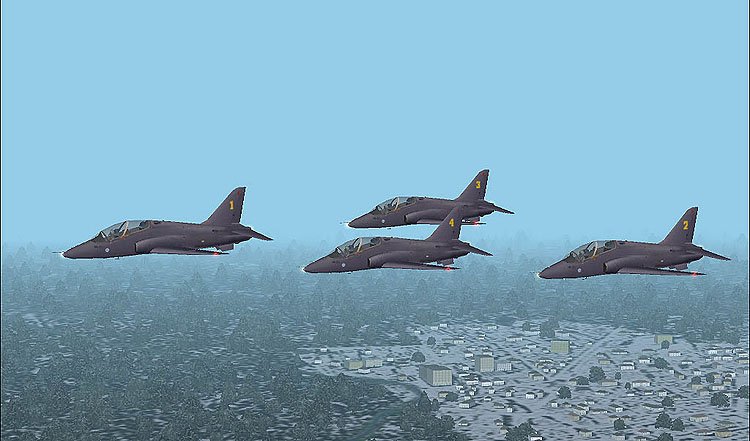
Want to make your airshow? So this package is for you. 4 aircraft will spin and twist the various elements of acrobatics, in fact, you can manage all this.
→ Size:
8 MB
→ Date:
23 years ago (05.02.2003 10:14)
→ Author:
Mikko Maliniemi, Kari Virtanen, Mark Beaumont
→ License:
Freeware - Free version, Do Not Redistribute
→ Downloaded:
579 time(s)